
Blog
Travel Budget Calculator: Plan Your Europe Trip Cost
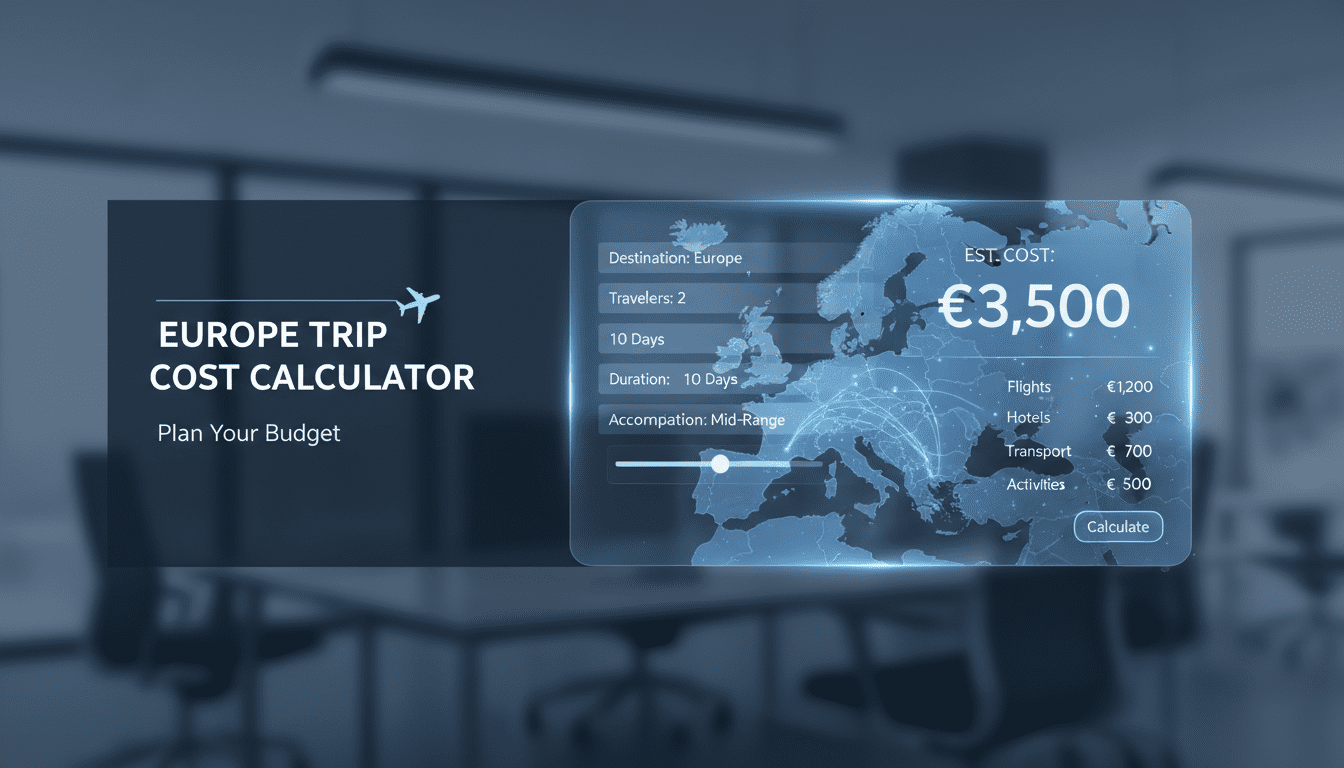
Travel Budget Calculator: Plan Your Europe Trip Cost
Planning a European tour requires precision, whether you are coordinating a corporate retreat, managing a “bleisure” trip, or organizing a personal sabbatical. The financial variance between regions—from the premium costs of Scandinavia to the value-driven markets of Southern Europe—can derail even the most carefully planned itinerary. A reliable travel budget calculator for a Europe trip is essential to maintain financial control.
Below, we provide a specialized tool designed to estimate your total trip liability, followed by a strategic guide on allocating capital efficiently across the continent.
Europe Trip Cost Estimator
Strategic Budget Allocation for European Travel
Effective budgeting goes beyond simple addition; it requires understanding the economic landscape of your destination. Europe is economically diverse, and costs can triple depending on whether you are in London or Lisbon. Founders and executives should approach travel budgeting with the same rigor used in operational expenditure planning.
1. Regional Cost Variance
Northern and Western Europe generally command a premium. For instance, if your itinerary includes the UK, you must account for the strength of the Pound Sterling. Understanding local fiscal environments, such as those analyzed in a UK tax calculator, can provide context on the high cost of living and services in London compared to the rest of the continent.
Similarly, cities like Amsterdam involve higher daily costs for logistics and dining. Reviewing the economic baseline via a Netherlands tax calculator context can help set realistic expectations for service charges and VAT contributions in the Benelux region.
2. The Contingency and VAT Factor
A common oversight in travel budgeting is failing to account for Value Added Tax (VAT) and the necessary contingency buffers. In many European countries, VAT on goods and services ranges from 17% to 27%. While tourists can often claim refunds on retail purchases, service VAT is a sunk cost.
We recommend calculating a safety buffer—typically 10% to 15%—to cover currency fluctuations and unexpected transfers. You can use our percentage calculator to quickly determine the exact buffer needed based on your subtotal.
3. Accommodation vs. Logistics
When allocating funds, consider the trade-off between accommodation location and transport costs. Staying central reduces transit time—a critical metric for executives—but increases nightly rates. Conversely, outlying areas require reliable transport budgeting.
- High-Speed Rail: Often more efficient than flying but can be pricey if booked late.
- Car Rentals: Essential for rural areas but factor in high fuel costs and parking fees.
- Rideshare/Taxis: Convenient but variable pricing.
Detailed Cost Breakdown Categories
To use the travel budget calculator for a Europe trip effectively, input accurate estimates for these core categories:
Airfare and Inter-City Transit
Transatlantic flights are your largest single line item. However, intra-European travel (trains vs. budget airlines) adds up quickly. Always include baggage fees in your estimates, as European carriers are strict regarding luggage policies.
Daily Spending (Per Diem)
Your “daily spend” input should cover three main areas:
- Dining: From Michelin-star experiences to quick bistros.
- Entrances: Museums, historical sites, and networking events.
- Local Transport: Metro tickets, Ubers, or city passes.
If you are managing receipts for multiple travelers or need to tally expenses on the go, a mobile-friendly basic math calculator is a simple but indispensable tool for keeping your daily ledger accurate.
Frequently Asked Questions
How much should I budget for a 2-week trip to Europe?
For a mid-range experience, budget approximately $3,500–$5,000 per person, including flights. Luxury travel can easily exceed $10,000 per person. Use the calculator above to refine this based on your specific travel style.
Is Eastern Europe significantly cheaper?
Yes. Countries like Poland, Hungary, and the Czech Republic can be 30-50% cheaper than France, the UK, or Switzerland regarding accommodation and dining.
How do I handle currency conversion rates in my budget?
Always budget in your home currency but use a conservative exchange rate (e.g., add 5% to the current rate) to protect against market volatility during your trip.
Conclusion
A well-planned budget allows you to focus on the experience rather than the expense. By using a robust travel budget calculator for your Europe trip and understanding the regional economic nuances—from the high-cost centers of Northern Europe to the value regions of the South—you can execute a flawless itinerary. For further resources on financial planning tools, visit our blog.
