
Blog
Sleep Calculator: Calculate Optimal Wake Times
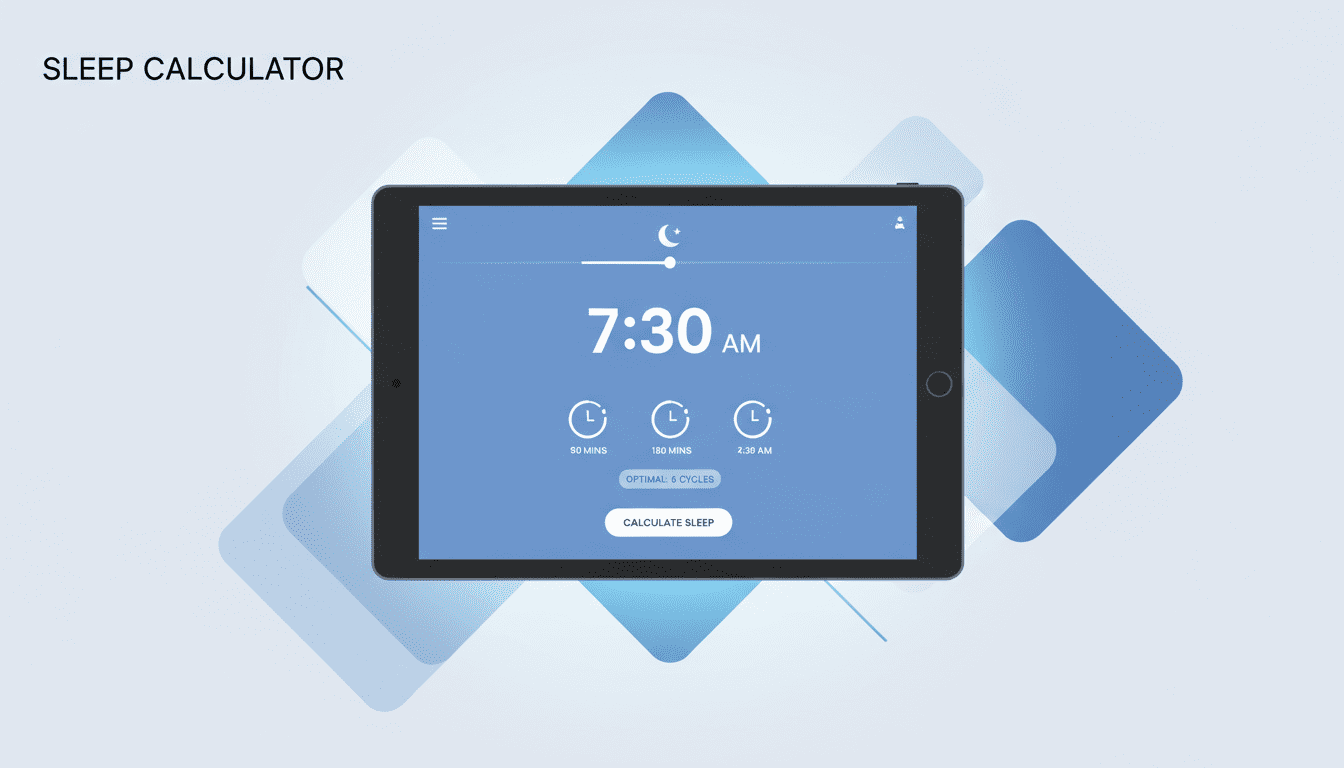
For high-performing founders, executives, and decision-makers, sleep is not merely a pause in productivity; it is a strategic biological asset. Cognitive performance, emotional intelligence, and decision-making speed are directly correlated with sleep hygiene. The conventional wisdom of “8 hours a night” is often a gross oversimplification that fails to account for the body’s ultradian rhythms. Real recovery relies on completing full sleep cycles, not just clocking hours. Our Sleep Calculator is designed to help you synchronize your wake-up time with your biology, preventing the debilitating grogginess known as sleep inertia.
Whether you are optimizing for a critical board meeting or recovering from a high-intensity sprint, precision in rest is key. Just as you would use an investment calculator to project financial returns, you must calculate your sleep cycles to project cognitive returns. Below is a precision tool designed to calculate optimal wake and sleep times based on the 90-minute sleep cycle rule.
Optimal Sleep Calculator
The Science of Ultradian Rhythms
To understand why timing matters more than raw duration, we must look at the architecture of human sleep. The brain does not simply shut down; it engages in a complex, active process of restoration. A typical night is composed of 4 to 6 cycles, each lasting approximately 90 minutes. These cycles transition through distinct stages, a process governed by ultradian rhythms.
The stages of a sleep cycle include:
- NREM Stage 1 & 2 (Light Sleep): The transition from wakefulness. Heart rate slows, and body temperature drops. This is the easiest stage to wake from.
- NREM Stage 3 (Deep Sleep): Also known as slow-wave sleep. This is critical for physical recovery, immune system support, and muscle repair. Waking up during this stage results in severe sleep inertia—that heavy, disoriented feeling that coffee struggles to fix.
- REM (Rapid Eye Movement): Essential for cognitive functions, memory consolidation, and emotional regulation. This is where dreaming occurs.
The goal of the calculator above is to ensure your alarm rings during the light sleep phase at the end of a cycle, rather than the deep sleep phase in the middle. This is why 7.5 hours of sleep (5 cycles) often feels more restorative than 8 hours (5.3 cycles).
Strategic Sleep Management for Executives
For leaders, sleep debt is cumulative and destructive. Missing a cycle one night might seem negligible, but chronic restriction degrades executive function. Studies indicate that after 17-19 hours without sleep, performance on cognitive tests is equivalent to a blood alcohol concentration of 0.05%. If you wouldn't come to a board meeting intoxicated, you shouldn't come sleep-deprived. You can verify the impact of intoxication levels using a bac calculator to understand the comparative impairment.
The "Sleep Inertia" Trap
Sleep inertia is the physiological state of impaired cognitive and sensory-motor performance that is present immediately after awakening. It persists during the transition from sleep to wakefulness. If you wake up out of deep sleep (Stage 3), this inertia can last for hours, reducing your reaction times and analytical capabilities. By using the calculator to target the end of a 90-minute cycle, you bypass the deep sleep wake-up, effectively hacking your biology for an immediate start to the day.
Physiological Metrics and Sleep Quality
While timing is the foundation, the quality of those cycles is dictated by your overall health metrics. Sleep is a metabolic activity. Your body composition, specifically your body fat percentage and lean muscle mass, influences the production of hormones like leptin and ghrelin, which regulate sleep and hunger.
Individuals with higher visceral fat may experience disrupted breathing patterns or sleep apnea, fragmenting the sleep cycles. It is advisable to monitor your physical composition using a body fat calculator to ensure your metabolic health isn't sabotaging your rest. Furthermore, maintaining an optimal weight reduces the mechanical load on the respiratory system during supine rest; checking your status with an ideal weight calculator can provide a baseline goal for health optimization.
Nutrition: The Fuel for Sleep
What you eat dictates how you sleep. A diet high in refined sugars can cause blood glucose spikes that disrupt the sleep cycle, causing micro-awakenings that you might not even remember but that prevent you from entering deep restorative sleep. Conversely, a balanced intake of protein and complex carbohydrates supports the production of tryptophan and serotonin, precursors to melatonin.
Executives should track their intake not just for aesthetics, but for sleep hygiene. Using a macro calculator allows you to balance your protein, fats, and carbohydrates to support sustained sleep throughout the night. Avoid heavy meals within 3 hours of bed, as active digestion raises core body temperature, which signals the body to stay awake.
Precision Planning and Consistency
The human body craves consistency. Our circadian rhythms are anchored by light and temperature, but also by habit. The standard deviation of your wake-up times matters as much as the average wake-up time. If you wake up at 6:00 AM on weekdays and 10:00 AM on weekends, you are effectively giving yourself "social jetlag."
To analyze your sleep consistency, you could theoretically apply statistical analysis to your wake times using a standard deviation calculator. A lower standard deviation in wake times correlates with higher energy levels and better mood regulation. The goal is to keep your wake-up time within a 30-minute window, seven days a week.
Calculating the "Fall Asleep" Buffer
Our calculator includes a standard 15-minute buffer for "sleep latency"—the time it takes to transition from fully awake to Stage 1 sleep. However, this is an average.
- If you fall asleep in < 5 minutes: You are likely sleep-deprived and carrying a high sleep debt.
- If you take > 30 minutes: You may be experiencing hyperarousal, often caused by stress or blue light exposure.
For those who need to calculate precise time intervals for travel across time zones or complex scheduling, an online scientific calculator can help manage the arithmetic of circadian shifts, but the tool above simplifies the daily routine.
Optimizing Your Sleep Environment
Even with perfect timing calculated, your environment can interrupt a cycle. To ensure you complete the full 90 minutes:
- Temperature: Keep the room cool (approx. 65°F or 18°C). A drop in core body temperature is a biological signal to initiate sleep.
- Light: Total darkness is non-negotiable. Light pollution inhibits melatonin. Use blackout curtains or a high-quality sleep mask.
- Sound: White noise or pink noise can mask sudden environmental sounds that might trigger a cortisol spike and wake you up.
Frequently Asked Questions
Does the 90-minute rule apply to naps?
Yes, but with strict modifications. For a power nap, aim for 20 minutes (staying in Stage 1/2 light sleep) or a full 90 minutes (one complete cycle). Waking up after 45-60 minutes typically interrupts deep sleep, leading to severe grogginess and reduced performance.
How accurate is the 15-minute fall-asleep buffer?
The 15-minute buffer is based on the global average for healthy adults. If you track your sleep with a wearable device (like an Oura Ring or Whoop), you can adjust your bedtime manually based on your personal sleep latency data.
Can I train my body to require less sleep?
Generally, no. Sleep need is largely genetic. While you can train yourself to wake up early, you cannot train your brain to need less biological recovery without suffering cognitive decline, emotional instability, and long-term health risks.
What if I wake up in the middle of the night?
Do not look at the clock. Checking the time triggers anxiety ("math stress") about how much sleep you are losing, which spikes cortisol and keeps you awake. Keep the room dark and focus on deep breathing to lower your heart rate.
Is 9 hours of sleep better than 7.5?
Not necessarily. 9 hours represents 6 full cycles, while 7.5 hours represents 5. Both are excellent. However, sleeping 8.5 hours might actually make you feel worse than 7.5, because you are waking up in the middle of that 6th cycle. Timing is often more important than the extra 30 minutes.
Conclusion
Sleep is the foundation upon which high performance is built. By shifting your focus from "hours in bed" to "cycles completed," you can maximize your energy levels and cognitive clarity. Use the Sleep Calculator above to plan your rest with the same precision you apply to your business operations. Aligning your alarm with your ultradian rhythms is a simple, high-leverage change that yields immediate returns in focus, mood, and leadership capability.
