
Blog
Free Mulch Calculator: For Flower Beds & Gardens
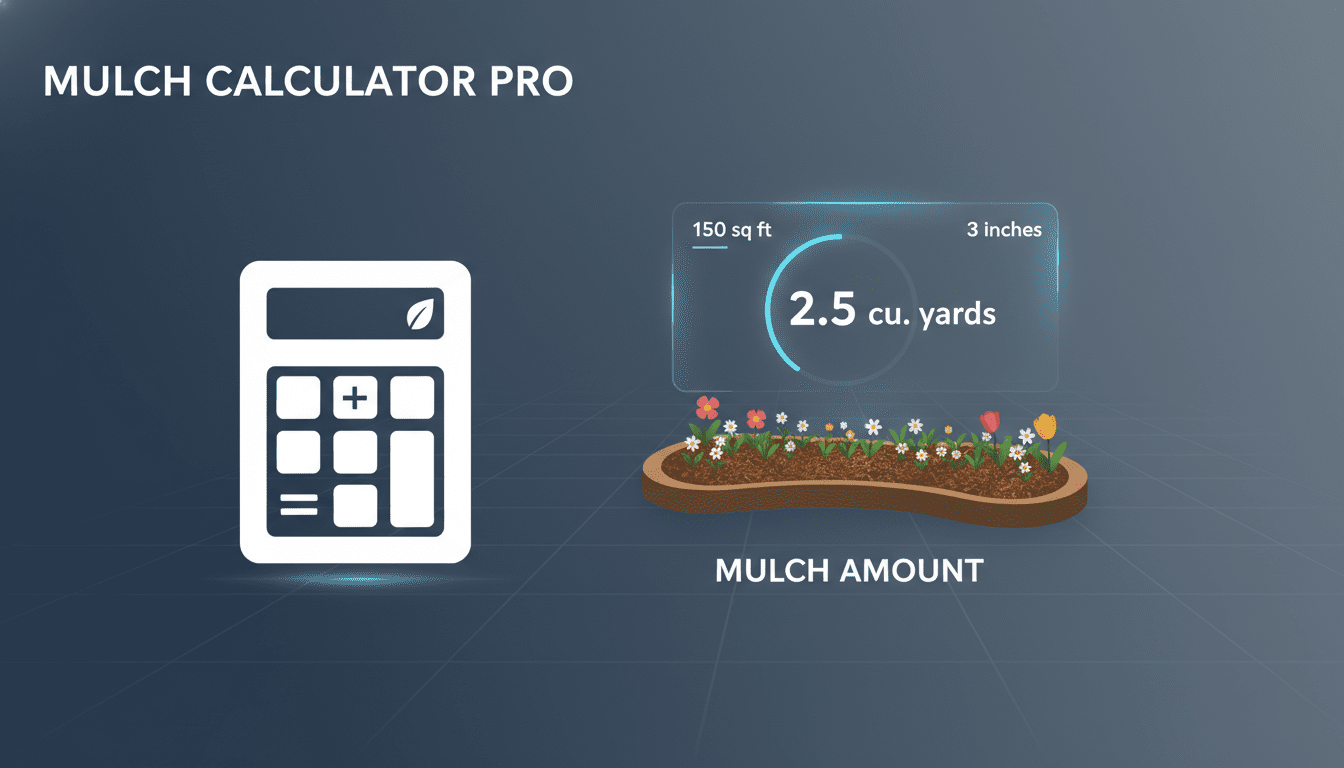
Effective landscape management is an exercise in precision, not approximation. Whether you are a facility manager overseeing a corporate campus, a homeowner aiming to maximize curb appeal, or a contractor bidding on a commercial project, the difference between profit and loss often lies in material estimation. Over-ordering leads to waste and disposal fees; under-ordering causes project stoppages and labor inefficiencies.
Mulch serves as the protective armor for your soil ecosystem, regulating temperature, retaining moisture, and suppressing weed growth. However, calculating the exact volume required involves three-dimensional geometry that can be tedious to compute manually. This guide provides a definitive framework for estimating mulch requirements, selecting the correct material density, and optimizing your landscaping budget.
Mulch Volume Calculator
0.00
0.00
0
0
The Science of Soil Insulation and Moisture Retention
Before diving into the logistics of procurement, it is essential to understand why precision in mulch depth matters. Mulch is not merely aesthetic; it is a functional engineering layer for the soil. Applying too little (less than 2 inches) fails to provide the thermal insulation necessary to protect root systems from extreme heat or frost. It also allows sunlight to penetrate to the soil surface, triggering the germination of dormant weed seeds.
Conversely, applying too much (over 4 inches) can induce a state of hypoxia in the soil. Excessive mulch creates an impermeable barrier that prevents oxygen exchange, leading to root rot and fungal diseases. Furthermore, "volcano mulching"—piling mulch high against the trunk of a tree—promotes bark decay and insect infestation. The calculator above assumes a standard, horticultural-approved depth of 2 to 3 inches, which strikes the optimal balance for gas exchange and moisture retention.
Advanced Measurement Techniques for Irregular Shapes
The calculator provided handles rectangular beds with ease, but real-world landscapes rarely adhere to perfect right angles. Modern garden design often incorporates kidney shapes, serpentine borders, and circular islands. To estimate these accurately, you must employ geometric decomposition.
The Triangulation Method
For organic, curving shapes, the most accurate manual method is triangulation. Divide the irregular shape into a series of triangles. Measure the base and height of each triangle to calculate its area (Area = 0.5 × Base × Height), then sum the totals. For complex projects requiring high-precision geometry, utilizing an online scientific calculator can help you process the trigonometric functions required for accurate area summation.
The Radius Method for Circular Beds
For circular flower beds, measure the distance from the center of the bed to the edge (the radius). The area is calculated as π (3.14159) multiplied by the radius squared. If you are dealing with an oval, the formula changes to π × (Major Radius) × (Minor Radius). Once you have the square footage, you can input that figure into the "Length" field of our calculator and set the "Width" to 1 to get your volume.
Material Selection: A Comparative Analysis
Selecting the right mulch is as critical as calculating the volume. Different materials offer varying decomposition rates, pH influences, and aesthetic qualities.
- Hardwood Shredded Mulch: The industry standard. It knits together well, making it resistant to washout on slopes. It decomposes moderately fast, adding organic matter to the soil.
- Pine Bark Nuggets: These decompose more slowly than shredded wood and provide excellent aeration. However, they are buoyant and prone to floating away in heavy rains.
- Cedar Mulch: Known for its natural insect-repellent properties. It decomposes slowly and maintains its color longer than hardwood.
- Inorganic Mulch (Stone/Rubber): These do not decompose. While they eliminate the need for annual top-dressing, they do not improve soil health and can absorb significant heat, potentially stressing plants in hot climates.
When planning your budget, consider the longevity of the material. While stone has a higher upfront cost, its lifecycle cost is lower due to durability. For verifying contractor quotes on these materials, a standard arithmetic calculator is a useful tool to keep on hand to check line-item totals.
The Economics of Procurement: Bulk vs. Bagged
One of the most common dilemmas for property owners is choosing between bulk delivery and bagged purchase. This decision should be based on volume thresholds and site accessibility.
The Bulk Threshold
Generally, the "break-even" point for bulk delivery is around 2 to 3 cubic yards. Below this volume, the delivery fees charged by landscape supply yards often negate the lower price per yard. Bulk mulch is dumped loose, usually in a driveway. This requires a plan for moving the material (wheelbarrows, pitchforks) and cleaning the dump site afterward.
Bagged Convenience
Bagged mulch (typically 2 or 3 cubic feet per bag) carries a premium price per unit of volume. However, it offers superior logistics for sites with difficult access, such as fenced backyards or terraced gardens where a wheelbarrow cannot go. It also allows for cleaner storage if the project spans several weekends.
When calculating the total financial outlay, remember to factor in local sales tax, which can vary significantly by municipality. Using a gst calculator or a sales tax estimator helps in finalizing the exact budget required for the transaction.
Strategic Budgeting for Landscape Projects
Landscaping is a capital improvement that enhances property value, but it requires cash flow management. Many homeowners choose to allocate their annual tax returns toward these exterior improvements. By utilizing a tax refund calculator early in the year, you can project your available liquidity and schedule your mulch installation for the spring season without disrupting your monthly operating budget.
Labor Cost Considerations
If you are not installing the mulch yourself, labor becomes a significant portion of the cost. Professional landscaping crews typically charge either by the hour or by the yard installed. If you are hiring independent contractors or managing a small crew, understanding the payroll implications is vital. An hourly tax calculator can assist in estimating the true cost of labor, including necessary withholdings if you are employing staff directly.
Regional Considerations and Environmental Factors
The effectiveness of mulch is heavily influenced by local climate conditions. In arid regions, a thicker layer may be necessary to prevent rapid soil evaporation. In humid climates, a thinner layer helps prevent fungal growth.
Furthermore, regional pricing varies drastically based on the availability of timber byproducts. For example, residents in the Pacific Northwest may find fir bark cheap, while those in the Southeast have access to inexpensive pine straw. Conversely, pricing in urban centers with high costs of living and transport regulations will be higher. For instance, property owners utilizing a tax calculator california are often aware that regional environmental taxes and higher labor rates in the state can inflate the cost of landscaping services compared to the national average.
Installation Protocols for Maximum ROI
To ensure your investment in mulch yields the best results for your garden's health and aesthetics, follow these professional installation protocols:
1. Weed Abatement
Never apply mulch over existing weeds. The mulch will not kill them; it will only provide them with a better environment to grow. Remove all vegetation down to the root before application. For aggressive weeds, consider a permeable landscape fabric, though many horticulturists prefer cardboard or newspaper layers which decompose over time.
2. Edging and Definition
Create a distinct edge between the lawn and the flower bed. This "trench edge" should be 3 to 4 inches deep. This not only provides a crisp visual line but also physically prevents grass rhizomes from migrating into the mulched area.
3. Nitrogen Drawdown Mitigation
Fresh wood chips can temporarily deplete nitrogen from the soil surface as they decompose (a process called nitrogen drawdown). If you are using fresh, un-aged wood chips around heavy feeders like annual flowers or vegetables, consider applying a nitrogen-rich fertilizer before mulching to compensate.
Long-Term Maintenance and Refreshing
Mulch is not a "set it and forget it" solution. Organic mulch decomposes, which is beneficial for the soil but requires replenishment. A common mistake is simply adding a new layer on top of the old one every year without checking the depth. This leads to the "mulch volcano" effect mentioned earlier.
Before ordering new material, use a garden fork to turn over the existing mulch. This fluffs the material, improves aesthetics, and breaks up any compacted layers that have become hydrophobic (water-repelling). You may find you only need a "top dressing" of 1 inch rather than a full 3-inch application. This maintenance step can save you up to 60% on material costs annually.
For those managing commercial real estate or rental properties, these maintenance costs are deductible expenses. Using a property purchase tax calculator and related financial tools can help investors understand how ongoing maintenance impacts the overall return on investment (ROI) and capitalization rate of the asset.
Frequently Asked Questions
How do I calculate mulch for a slope?
Calculating for a slope requires a slight adjustment. Because the surface area of a slope is greater than the flat "footprint" on a map, you should increase your estimated volume by approximately 10% to 15%. Additionally, on steep slopes, avoid lightweight mulch like pine nuggets, which will wash away. Use shredded hardwood that knits together.
What is the difference between dyed and natural mulch?
Dyed mulch is typically wood waste (pallets, construction debris) that is ground up and sprayed with a colorant (iron oxide for red, carbon for black). Natural mulch is usually bark or shredded tree wood. Dyed mulch holds color longer—often an entire season—whereas natural mulch fades to gray within months. However, natural mulch generally adds more nutrients to the soil as it decomposes.
Can I use fresh wood chips from a tree service?
Yes, arborist wood chips are an excellent, free resource. However, they are best used for pathways, around mature trees, or in shrub borders. Avoid using fresh chips in vegetable gardens or around delicate annuals, as the decomposition process can be chemically active and heat up the soil. Allow fresh chips to age for 6 months if possible.
How many bags of mulch are on a pallet?
This varies by supplier, but a standard pallet typically holds between 45 and 60 bags of mulch. If your calculation shows you need more than 30 bags, it is highly recommended to ask the store for a "pallet price" or bulk discount, which can significantly reduce the unit cost.
Does mulch attract termites?
Termites are attracted to moisture and wood. While mulch does not necessarily "draw" termites from miles away, it provides a hospitable environment for them. To mitigate risk, keep mulch at least 6 to 12 inches away from the foundation of your home or building. This creates a dry buffer zone that termites are reluctant to cross.
Conclusion
Landscaping is a synthesis of art and engineering. While the visual selection of plants and textures provides the art, the calculation of materials provides the engineering foundation. By utilizing the Mulch Calculator, you move from guesswork to precision, ensuring that your project is executed efficiently and economically.
Whether you are calculating the ROI of a property improvement or simply trying to beautify your backyard for the summer, accurate data is your most valuable tool. For further assistance with the financial aspects of home improvement and management, explore our blog for more resources on optimizing your budget and planning your projects with confidence.
