
Blog
Coffee To Water Ratio Calculator: The Perfect Brew
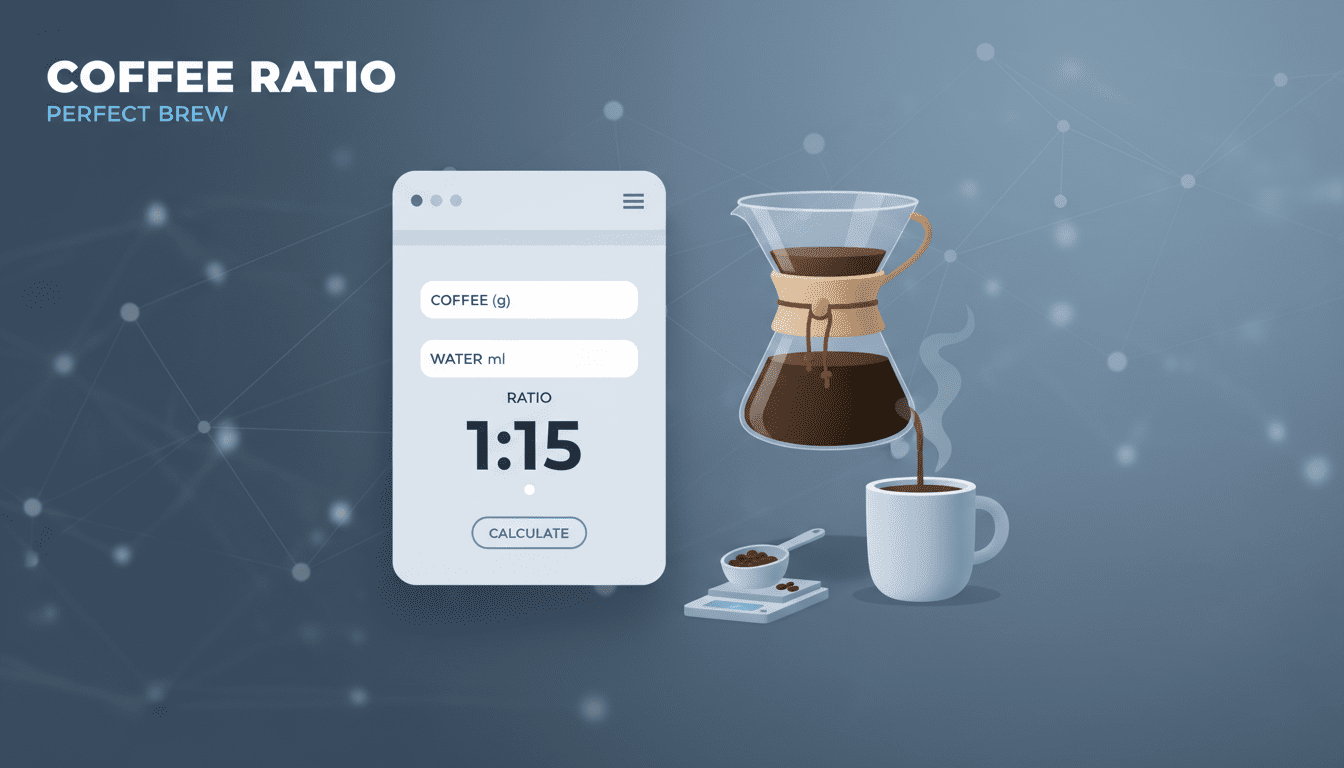
☕ Professional Brew Calculator
Brewing Recipe:
For the modern executive or founder, coffee is rarely just a beverage; it is a ritual of optimization. It is the fuel that powers early morning strategy sessions and late-night financial reviews. However, the difference between a cup that heightens cognitive function and one that induces a grimace often lies in a single, overlooked variable: the coffee-to-water ratio.
Achieving the “Golden Cup”—a standard defined by the Specialty Coffee Association (SCA)—is not a matter of luck. It is a matter of mathematics and chemistry. Just as you wouldn’t project Q4 revenue without precise data, you shouldn’t brew your morning pour-over based on guesswork. The calculator above is designed to bridge the gap between artisan intent and scientific execution, ensuring that every gram of coffee yields its maximum potential.
The Science of Extraction: Why Ratio Matters
At its core, brewing coffee is the process of using water as a solvent to extract soluble compounds from roasted bean fragments. These compounds include fruit acids, caffeine, lipids, melanoidins, and carbohydrates. The ratio of coffee to water dictates the strength (Total Dissolved Solids, or TDS) and the extraction yield (the percentage of the bean that ends up in the liquid).
If you use too much water relative to the coffee (a high ratio), you risk over-extraction. This pulls out the slower-dissolving compounds, which are typically bitter and astringent. Conversely, using too little water (a low ratio) leads to under-extraction, leaving behind the sweet balancing sugars and resulting in a sour, salty, or hollow flavor profile.
Mastering this ratio is the first step in “dialing in” your brew. It provides a baseline from which you can adjust other variables, such as grind size and water temperature.
Decoding the Golden Ratio Standards
While personal taste is subjective, the industry has coalesced around specific ratios that generally provide the most balanced extraction for filter coffee. Understanding these ratios allows you to manipulate the outcome based on your preference or the specific bean origin.
The 1:15 Ratio (The “Bold” Standard)
A 1:15 ratio means using 1 gram of coffee for every 15 grams of water. This produces a cup with a heavy body and intense flavor. It is often preferred for medium to dark roasts where the objective is to highlight chocolate, nut, or caramel notes. If you are transitioning from espresso-based drinks to filter coffee, this ratio often feels the most familiar.
The 1:16 Ratio (The “Golden” Standard)
Widely considered the sweet spot for most brewing methods, the 1:16 ratio offers a perfect balance between clarity of flavor and body. It is the starting point for almost every specialty coffee shop. If you are brewing a new bag of beans and aren’t sure where to start, 1:16 is your safest bet for a quality cup.
The 1:17 to 1:18 Ratio (The “Tea-Like” Standard)
For high-quality, light-roast single-origin coffees—particularly those from Ethiopia or Panama—a higher ratio like 1:17 or 1:18 is often employed. This dilution spreads out the flavor compounds, allowing the drinker to perceive delicate floral, citrus, and berry notes that might be masked in a more concentrated brew. This approach is similar to how one might analyze the nutritional density of a meal using a macro calculator; you are looking for the specific breakdown of nuanced components rather than just total mass.
Brewing Methods and Their Ideal Ratios
The physics of your brewing device dictates how water interacts with the grounds, necessitating adjustments to your ratio.
Immersion Brewing (French Press, AeroPress)
In immersion brewing, the coffee grounds are fully submerged in water for the duration of the brew. Because the water becomes saturated with coffee solubles over time, the extraction slows down. To compensate, immersion methods often tolerate or require a tighter ratio, typically between 1:12 and 1:15.
The result is a textured, rich cup. However, because these methods often use a metal mesh filter rather than paper, more oils and fines enter the cup, increasing the perceived body.
Percolation Brewing (Pour-Over, Drip)
In percolation (like a Hario V60, Chemex, or automatic drip machine), fresh water constantly flows through the bed of coffee. This is a more efficient method of extraction. Consequently, slightly wider ratios of 1:16 to 1:17 are ideal to prevent bitterness. The paper filters used in these methods remove the oils, resulting in a “cleaner” cup with higher clarity.
Espresso
Espresso is an entirely different beast, relying on 9 bars of pressure. The ratios here are much tighter, typically 1:2 (e.g., 18g of coffee in, 36g of liquid espresso out). While our calculator above is optimized for filter coffee, the principle of measuring input and output remains the same.
The Non-Negotiable: Mass vs. Volume
If there is one takeaway for the aspiring home barista, it is this: throw away your scoops.
Measuring coffee by volume (scoops or tablespoons) is notoriously inaccurate. A tablespoon of dark roast beans weighs significantly less than a tablespoon of light roast beans because the roasting process expands the bean and reduces its density. Furthermore, the grind size affects how much coffee fits in a spoon.
To achieve consistency, you must use a digital scale. Measuring by weight (grams) ensures that your 1:16 ratio is mathematically true every single time. This level of precision is not unlike calculating fiscal requirements; you wouldn’t estimate tax liabilities by “eyeing it.” You would use a precise tool, much like a sales tax calculator, to ensure every cent is accounted for. Coffee requires the same rigor.
Water Chemistry: The Hidden Variable
Coffee is approximately 98.5% water. Therefore, the quality of the water you use has a profound impact on the final taste. Tap water often contains chlorine and varying levels of minerals that can mute acidity or cause bitterness.
- Hardness: Magnesium and calcium aid in extraction, pulling out flavor. However, too much bicarbonate (buffer) can neutralize the pleasant acids in coffee, making it taste flat or chalky.
- Temperature: The SCA recommends water between 195°F and 205°F (90°C–96°C). Boiling water can degrade certain compounds, while tepid water will fail to extract the complex acids.
If you are serious about your brew, consider using filtered water or water with a mineral profile optimized for coffee. It’s a small adjustment with a high ROI on flavor.
Troubleshooting Your Brew
Even with a perfect ratio, your coffee might not taste right. Here is how to diagnose the issue based on your palate.
The Sour Cup
Diagnosis: Under-extraction. The water passed through too quickly or wasn’t hot enough to dissolve the sugars.
The Fix:
- Grind finer (increase surface area).
- Use hotter water.
- Increase the amount of water slightly (pushing the extraction further).
The Bitter Cup
Diagnosis: Over-extraction. You have dissolved the tannins and dry distillates that are unpleasant.
The Fix:
- Grind coarser.
- Lower the water temperature slightly.
- Use less water (tighten the ratio).
Equipment: Investment vs. Return
Building a high-end coffee setup can be an investment. From precision grinders like the Mahlkönig or Fellow Ode to temperature-controlled gooseneck kettles, the costs add up. For the pragmatic executive, justifying this cost is about analyzing the daily value. If a $500 setup saves you from purchasing two $6 lattes daily, the break-even point is reached in under two months.
When planning a dedicated coffee station—perhaps for a home office or a startup breakroom—spatial planning is also key. You need to ensure your grinder, machine, and accessories fit the workflow. In this sense, setting up your brew bar requires the same spatial awareness as using a square footage calculator to optimize an office floor plan.
Health and Performance Considerations
For many leaders, coffee is a tool for biohacking. The caffeine content in your cup is directly related to the amount of coffee grounds used and the extraction time. A standard 1:15 ratio brew will generally contain more caffeine per ounce than a 1:18 brew simply because there is more raw material present.
However, it is vital to balance performance with health. Excessive caffeine consumption can disrupt sleep and increase cortisol. Monitoring your intake is crucial. Just as one might track physical metrics using a BMI calculator to maintain physical health, tracking your caffeine intake (via the grams of coffee consumed) helps maintain mental acuity without the crash.
Furthermore, for those on specific metabolic protocols—such as those using GLP-1 agonists for health management—appetite and digestion speed can change. Understanding how liquid calories and caffeine affect your body during these timelines is important, a concept adjacent to tracking progress with an Ozempic weight loss timeline calculator.
Advanced: The Economics of Coffee
Specialty coffee beans are a commodity that has seen significant price inflation due to climate change and supply chain complexities. When you buy a $25 bag of Geisha beans, waste is not an option. Using a ratio calculator ensures that you are getting exactly the number of cups you paid for, without wasting grounds on a brew that is too strong to enjoy.
If you are catering a large meeting or an office event, these costs scale up. Estimating the coffee needs for 50 people requires precise volume calculations to avoid running out or over-spending. It is a logistical exercise similar to event planning, where one might use a wedding budget calculator to allocate funds for beverages and catering. The principles of resource allocation remain constant, whether for a wedding or a board meeting.
Frequently Asked Questions (FAQ)
1. What is the best ratio for a strong cup of coffee?
For a strong, robust cup, a 1:15 ratio is recommended. This means 1 gram of coffee for every 15 grams of water. This ratio increases the concentration of dissolved solids, providing a heavier body and more intense flavor profile, ideal for adding milk or cream.
2. Does the roast level affect the ratio I should use?
Yes. Dark roasts are more soluble and brittle; they extract easily and can become bitter if over-extracted. A slightly tighter ratio (1:15) often works well to emphasize body. Light roasts are denser and harder to extract, often benefiting from a wider ratio (1:17 or 1:18) and higher water temperatures to open up their complex floral and fruity notes.
3. Can I measure water by volume (ml) and coffee by weight (g)?
Yes, and this is standard practice. Conveniently, 1 milliliter of water weighs exactly 1 gram. Therefore, if your ratio is 1:16 and you have 20g of coffee, you need 320g of water, which is equivalent to 320ml. This direct conversion simplifies the math significantly.
4. How does grind size impact the ratio?
Grind size and ratio are interconnected variables. If you use a finer grind, you increase the surface area, speeding up extraction. If you keep the ratio the same but grind finer, your coffee may taste stronger or even bitter. If you grind coarser, it may taste weaker. Typically, you lock in your ratio first (e.g., 1:16) and then adjust your grind size to perfect the flavor.
5. Why does my coffee taste watery even with the right ratio?
If the ratio is correct but the coffee is watery, you likely have a “channeling” issue or a grind that is too coarse. Channeling occurs when water finds an easy path through the coffee bed, bypassing most of the grounds. Ensure your coffee bed is flat and your pour is steady. Alternatively, check your water temperature; cool water cannot extract the oils and solids necessary to create texture.
Conclusion
Precision is the hallmark of excellence. Whether you are analyzing a P&L statement or brewing a morning cup of Ethiopia Yirgacheffe, the inputs determine the quality of the output. By utilizing the Coffee to Water Ratio Calculator, you eliminate the variables that lead to mediocrity.
Remember, the 1:16 ratio is your compass, but your palate is the captain. Use these tools to find your baseline, and then experiment to find the perfect brew that suits your taste. In a world of uncertainty, let your coffee be the one thing you can count on to be perfect, every single time.
