
Blog
Federal Income Tax Calculator in Santo Domingo for 2026
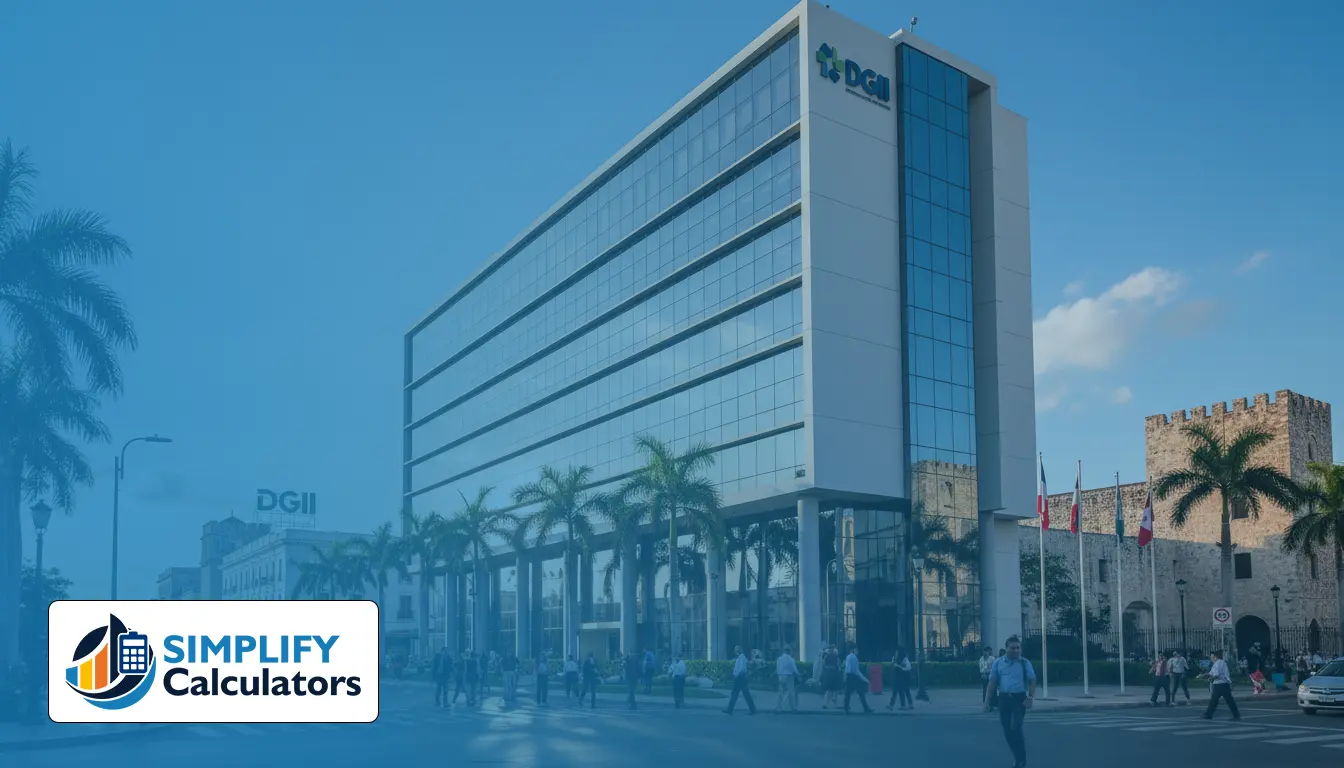
Federal Income Tax Calculator in Santo Domingo
| Gross Income | |
| Deductions | |
| Taxable Income | |
| Tax Before Credits | |
| Credits Applied | |
| Marginal Rate | |
| Effective Rate | |
| ▶ Total Tax Owed |
ⓘ Estimate only. Consult a tax professional for personalized advice.
Navigating the complexities of federal income tax can be a daunting task, especially when you’re in a vibrant and dynamic city like Santo Domingo. As the economic heart of the Dominican Republic, Santo Domingo is home to a diverse population of local professionals, entrepreneurs, and expatriates, all of whom share a common obligation: understanding and fulfilling their tax responsibilities. With the year 2026 on the horizon, proactive planning and accurate calculations are not just recommended, they are essential.
The Dominican Republic’s tax system, overseen by the Dirección General de Impuestos Internos (DGII), undergoes periodic adjustments, particularly concerning tax brackets and allowable deductions, often influenced by inflation and economic policies. For taxpayers in Santo Domingo, staying abreast of these changes for 2026 is critical to ensure compliance, avoid penalties, and optimize financial planning. This comprehensive guide aims to demystify the federal income tax landscape in Santo Domingo for the upcoming 2026 tax year, providing you with the knowledge and tools, including the concept of an effective Simplify Calculators solution, to confidently approach your tax obligations.
Whether you’re an employee, a freelancer, a business owner, or an expat, understanding how to accurately calculate your Impuesto Sobre la Renta (ISR) is paramount. We will delve into the projected 2026 tax brackets, explain taxable income categories, detail potential deductions, and walk you through a step-by-step process to estimate your tax liability. Prepare to gain clarity and confidence in managing your federal income tax in Santo Domingo for 2026.
Understanding the Dominican Republic’s Tax Landscape for 2026
The Dominican Republic operates under a progressive income tax system, meaning individuals with higher incomes pay a higher percentage of their earnings in tax. This system is designed to distribute the tax burden equitably across the population. For residents of Santo Domingo, understanding the foundational principles and the key players in this system is the first step towards accurate tax planning for 2026.
The DGII and Its Role
The Dirección General de Impuestos Internos (DGII) is the central authority responsible for the administration and collection of internal taxes in the Dominican Republic. Headquartered in Santo Domingo, the DGII is the ultimate arbiter of tax laws, regulations, and procedures. For 2026, the DGII will publish the official tax scale, typically adjusted annually for inflation (using the Consumer Price Index or IPC). All income tax declarations, payments, and consultations are handled through or governed by DGII guidelines. Their website and local offices in Santo Domingo are invaluable resources for official forms, declarations, and up-to-date information.
Who Pays Income Tax in Santo Domingo?
Income tax in Santo Domingo, and by extension the Dominican Republic, applies to a broad spectrum of individuals and entities. For 2026, the primary categories of taxpayers include:
- Resident Individuals: Individuals who reside in the Dominican Republic for more than 182 days in a tax year (whether continuous or not) are generally considered tax residents. Dominican tax residents are typically taxed on their worldwide income. This means income earned both within the Dominican Republic and abroad is subject to DR income tax.
- Non-Resident Individuals: Non-residents are taxed only on income sourced within the Dominican Republic. For instance, if a non-resident owns property in Santo Domingo and earns rental income from it, that income would be subject to DR tax. Special withholding rates often apply to non-residents.
- Legal Entities (Companies): Corporations, partnerships, and other businesses registered in the Dominican Republic are subject to corporate income tax, which is a separate but related topic. This article focuses on individual income tax.
- Employees: Individuals receiving salaries, wages, and other benefits from an employer in Santo Domingo. Employers are typically responsible for withholding income tax from their employees’ salaries and remitting it to the DGII.
- Freelancers and Independent Contractors: Individuals providing services or goods independently in Santo Domingo are responsible for declaring and paying their own income tax, often through quarterly advanced payments.
Key Taxable Income Categories
For the purposes of calculating your federal income tax in Santo Domingo for 2026, it’s crucial to identify all sources of income that are considered taxable. These generally include:
- Salaries, Wages, and Emoluments: This covers all forms of remuneration received from an employer, including base salary, commissions, bonuses, holiday pay, and certain benefits in kind.
- Professional Fees: Income earned by independent professionals, consultants, doctors, lawyers, artists, and other self-employed individuals.
- Rental Income: Profits derived from renting out real estate properties located in Santo Domingo or elsewhere in the DR.
- Capital Gains: Profits realized from the sale of assets such as real estate (e.g., property in Santo Domingo), shares, or other investments. Specific rules and exemptions may apply.
- Interest Income: Income earned from savings accounts, fixed deposits, bonds, and other financial instruments, unless specifically exempt.
- Dividend Income: Distributions of profits from companies. These are generally subject to a separate withholding tax at the company level.
- Business Profits: Income generated from commercial, industrial, or agricultural activities carried out by individuals.
Certain types of income may be exempt or subject to specific tax treatments, such as certain retirement pensions, social security benefits, and specific investment returns. Always consult official DGII guidelines for definitive exemptions.
Dominican Republic Federal Income Tax Brackets for 2026
The cornerstone of personal income tax calculation in Santo Domingo, or anywhere in the DR, lies in the progressive tax brackets. These brackets determine the rate at which different portions of your taxable income are taxed. The DGII typically adjusts these thresholds annually based on the Consumer Price Index (IPC) to account for inflation. While the official 2026 brackets will be published closer to the tax year, we can project them based on recent trends.
Projected 2026 Tax Thresholds and Rates
It is important to emphasize that the figures below for 2026 are projections and estimates based on historical adjustments and current economic trends. The DGII officially releases these figures, typically in late December or early January for the upcoming tax year. Taxpayers in Santo Domingo should always refer to the official DGII publications for the definitive 2026 tax scale.
Based on recent annual adjustments (which have seen the non-taxable threshold increase by approximately 5-10% annually), here is a hypothetical projection for the individual income tax brackets in the Dominican Republic for 2026:
Hypothetical Projected Income Tax Brackets (Annual) for 2026:
- Income up to RD$540,000.00: Exempt (0%)
- Income from RD$540,000.01 to RD$810,000.00: 15% on the excess over RD$540,000.00
- Income from RD$810,000.01 to RD$1,120,000.00: RD$40,500.00 (fixed amount) plus 20% on the excess over RD$810,000.00
- Income from RD$1,120,000.01 onwards: RD$102,500.00 (fixed amount) plus 25% on the excess over RD$1,120,000.00
(Note: These figures are illustrative and designed to help you understand the calculation process. Always verify with official DGII sources for the actual 2026 tax scale.)
How Tax Brackets Work: Progressive Taxation
The Dominican Republic employs a progressive tax system. This means that different portions of your income are taxed at different rates. You don’t pay the highest tax rate on your entire income; rather, only the portion of your income that falls into a higher bracket is taxed at that higher rate. This is a common point of confusion for many taxpayers in Santo Domingo.
Let’s use a hypothetical example with our projected 2026 brackets:
Imagine an individual in Santo Domingo with a net taxable annual income of RD$1,200,000.00 for 2026.
- The first RD$540,000.00 is exempt (0%).
- The income portion from RD$540,000.01 to RD$810,000.00 (which is RD$810,000.00 – RD$540,000.00 = RD$270,000.00) is taxed at 15%.
- Tax for this bracket: RD$270,000.00 * 0.15 = RD$40,500.00
- The income portion from RD$810,000.01 to RD$1,120,000.00 (which is RD$1,120,000.00 – RD$810,000.00 = RD$310,000.00) is taxed at 20%.
- Tax for this bracket: RD$310,000.00 * 0.20 = RD$62,000.00
- The remaining income portion, which falls into the highest bracket, is from RD$1,120,000.01 up to RD$1,200,000.00 (which is RD$1,200,000.00 – RD$1,120,000.00 = RD$80,000.00) is taxed at 25%.
- Tax for this bracket: RD$80,000.00 * 0.25 = RD$20,000.00
Total Income Tax Liability: RD$0 + RD$40,500.00 + RD$62,000.00 + RD$20,000.00 = RD$122,500.00
This progressive structure ensures that individuals with higher incomes contribute proportionally more to the national revenue, which in turn funds public services in Santo Domingo and across the Dominican Republic.
Calculating Your Income Tax in Santo Domingo: A Step-by-Step Guide for 2026
Accurately determining your federal income tax liability in Santo Domingo for 2026 requires a systematic approach. By following these steps, you can arrive at a close estimate of what you might owe to the DGII.
Step 1: Determine Your Gross Taxable Income
The first crucial step is to gather all your income statements and determine your total gross taxable income for the entire 2026 tax year. This includes, but is not limited to:
- Your total annual salary, wages, and bonuses from your employer(s) in Santo Domingo.
- Any income from freelance work, consulting, or independent contracts.
- Rental income from properties you own.
- Interest and dividend income (ensure you know which are taxable).
- Capital gains from the sale of assets.
- Any other income sources identified as taxable by the DGII.
Keep meticulous records throughout the year to make this step easier. Bank statements, pay stubs, invoices, and receipts are essential.
Step 2: Identify Allowable Deductions and Exemptions
Once you have your gross income, the next step is to subtract any allowable deductions and exemptions. The Dominican Republic tax law provides for certain deductions that reduce your net taxable income. Common deductions include:
- Social Security Contributions: Mandatory contributions to the Dominican Social Security System (Sistema Dominicano de Seguridad Social – SDSS), specifically contributions to the Pension Fund (AFP) and Family Health Insurance (SFS), are generally deductible from your gross income. Employers typically withhold these.
- Other Approved Deductions: While less common for individual employees, certain approved expenses for independent professionals or specific activities might be deductible. It’s vital to consult the DGII’s official guidelines for 2026 to confirm any such deductions.
It’s important to note that the Dominican Republic’s individual income tax system has a relatively limited scope for personal deductions compared to some other countries. Keep detailed records for any claimed deductions.
Step 3: Calculate Your Net Taxable Income
This is straightforward: subtract your total allowable deductions from your gross taxable income.
Net Taxable Income = Gross Taxable Income - Total Allowable Deductions
This “Net Taxable Income” is the figure against which the tax brackets will be applied.
Step 4: Apply the 2026 Tax Brackets
Now, take your Net Taxable Income and apply the projected 2026 tax brackets (or the official ones once released by the DGII). Refer back to the “How Tax Brackets Work” section for a detailed example of this progressive calculation.
Example using projected 2026 brackets:
Let’s say your Net Taxable Income for 2026 is RD$950,000.00.
- First bracket (up to RD$540,000.00): Exempt. Tax = RD$0.00
- Second bracket (RD$540,000.01 to RD$810,000.00): The portion taxed is RD$810,000.00 – RD$540,000.00 = RD$270,000.00.
- Tax = RD$270,000.00 * 0.15 = RD$40,500.00
- Third bracket (RD$810,000.01 to RD$1,120,000.00): Your income of RD$950,000.00 falls into this bracket, but only the portion exceeding the previous bracket’s limit is taxed at this rate. The portion taxed is RD$950,000.00 – RD$810,000.00 = RD$140,000.00.
- Tax = RD$140,000.00 * 0.20 = RD$28,000.00
- Fourth bracket (RD$1,120,000.01 onwards): No income in this bracket for this example.
Total preliminary tax: RD$0 + RD$40,500.00 + RD$28,000.00 = RD$68,500.00
Step 5: Factor in Potential Tax Credits
Unlike some other countries, the Dominican Republic’s individual income tax system for employees and self-employed individuals does not typically feature a wide array of personal tax credits (non-refundable amounts that reduce your tax liability directly). Most relief comes through the non-taxable minimum and allowable deductions. However, it is always prudent to check the official DGII updates for 2026, as specific credits for certain investments, industries, or social purposes might be introduced or modified.
For businesses, there are often various tax incentives and credits, but these generally do not apply to individual income tax for most residents of Santo Domingo.
Step 6: Determine Your Final Tax Liability
After applying the tax brackets and accounting for any potential credits (if applicable), you arrive at your final tax liability for the year 2026. If you are an employee, this is the amount that your employer should have withheld over the year (ISR Retención). If you are a freelancer or independent professional, this is the amount you will need to pay, usually through quarterly advanced payments or a final annual declaration.
Final Tax Liability = Total Tax from Brackets - Total Tax Credits (if any)
Comparing your calculated liability with the amounts already withheld or paid will tell you if you have a balance due or an overpayment (which could result in a refund).
The Power of an Online Federal Income Tax Calculator for Santo Domingo 2026
While the step-by-step manual calculation is invaluable for understanding the process, it can be time-consuming and prone to human error, especially when dealing with multiple income streams or complex scenarios. This is where a reliable online federal income tax calculator becomes an indispensable tool for residents of Santo Domingo.
Why Use a Calculator?
A specialized tax calculator for the Dominican Republic offers numerous benefits:
- Accuracy: Minimizes the risk of calculation errors, ensuring you arrive at a precise estimate of your tax liability.
- Efficiency: Provides quick results, saving you valuable time that would otherwise be spent on manual calculations.
- Planning: Allows you to project your tax burden under different income scenarios, aiding in financial planning throughout 2026. You can input various potential bonuses, freelance earnings, or changes in salary to see their impact on your taxes.
- Compliance: Helps ensure you are withholding or setting aside the correct amount of tax, reducing the likelihood of underpayment penalties.
- Clarity: Many calculators break down the calculation, showing how each part of your income is taxed, offering greater transparency.
Features to Look for in a DR Tax Calculator
When searching for a federal income tax calculator for Santo Domingo and the Dominican Republic for 2026, consider tools that offer the following features:
- Up-to-Date Tax Brackets: Crucially, it must be updated with the latest DGII tax scales for 2026 once they are officially released.
- Inclusion of DR-Specific Deductions: Accurately account for social security contributions (AFP, SFS) and any other legally recognized deductions in the Dominican Republic.
- Multiple Income Source Inputs: Ability to add different types of income (salary, freelance, rent, etc.).
- Currency Specificity: Operates in Dominican Pesos (RD$).
- User-Friendly Interface: Easy to navigate and understand, even for those without a strong financial background.
- “What-If” Scenarios: Allows you to adjust income or deduction figures to see immediate changes in your tax estimate.
- Expat Considerations: If applicable, look for tools that can address unique expat tax situations in the DR.
Introducing Simplify Calculators
While various tools exist, a well-designed online platform for financial calculations can be a game-changer. For those seeking clarity and precision, an intuitive tool can greatly assist. Imagine a platform that allows you to input your gross income, apply specific Dominican Republic deductions for 2026, and automatically calculate your tax liability based on the updated DGII brackets. Such resources, exemplified by the streamlined approach you might find at Simplify Calculators, empower individuals to take control of their financial planning. They transform what could be a complex and error-prone manual process into a quick and reliable digital solution, helping residents of Santo Domingo efficiently estimate their federal income tax for 2026.
Specific Considerations for Taxpayers in Santo Domingo
While the general principles of income tax apply nationwide, certain taxpayer categories and aspects require specific attention, particularly in a diverse urban environment like Santo Domingo.
Expat Taxation in Santo Domingo
Santo Domingo is a hub for expatriates from around the globe, and their tax situation can be more nuanced. Key considerations for expats include:
- Residency Rules: As mentioned, spending more than 182 days (continuous or not) in the DR generally establishes tax residency, leading to taxation on worldwide income. Expats should carefully track their days in the country.
- Worldwide Income: Once a tax resident, income earned globally is potentially taxable in the Dominican Republic. This often necessitates understanding double taxation treaties between the DR and the expat’s home country to avoid being taxed twice on the same income.
- Foreign-Sourced Income: Income like pensions, investments, or rental income from properties outside the DR will need to be declared.
- Tax Identification Number (RNC): Expats working or earning income in the DR will need an RNC, obtainable from the DGII.
It’s highly advisable for expats in Santo Domingo to consult with a tax professional experienced in international tax law and Dominican Republic regulations.
Freelancers and Independent Contractors
The rise of the gig economy has led to a significant increase in freelancers and independent contractors in Santo Domingo. For these individuals, tax compliance has specific requirements:
- Registration: Freelancers earning income often need to register with the DGII and obtain an RNC as a “persona física” (natural person) conducting economic activities.
- Quarterly Advanced Payments (Anticipos): Unlike employees whose tax is withheld, freelancers are generally required to make quarterly advanced payments towards their annual income tax liability. These anticipos are calculated based on the previous year’s declared income or projected income.
- Invoicing and ITBIS: Depending on their services and annual income threshold, freelancers might also be required to register for and charge ITBIS (Impuesto sobre Transferencias de Bienes Industrializados y Servicios – VAT/GST) on their invoices.
- Expense Deductions: Freelancers typically have more opportunities to deduct business-related expenses than employees, reducing their taxable income. Keep detailed records of all business expenses.
Proactive record-keeping and understanding quarterly obligations are crucial for independent workers in Santo Domingo.
Employers’ Responsibilities
For businesses and employers operating in Santo Domingo, the burden of tax compliance extends to their employees’ income tax. Key responsibilities include:
- Withholding ISR (Retención): Employers are legally obligated to withhold the appropriate amount of income tax from employee salaries and remit it to the DGII on a monthly basis.
- ISR Declaration (IR-3, IR-13): Employers must file monthly declarations (IR-3) detailing the ISR withheld from all employees and an annual summary (IR-13).
- Annual Salary Statement: Employers must provide employees with an annual statement of their total income and tax withheld (similar to a W-2 form).
- Social Security Contributions: Beyond ISR, employers also have responsibilities regarding employee and employer contributions to the SDSS.
Failure to comply with these obligations can result in significant penalties for businesses in Santo Domingo.
Staying Compliant: Deadlines and Penalties
Adherence to tax deadlines is non-negotiable in the Dominican Republic. For individual income tax in 2026:
- Annual Declaration (IR-1): The deadline for individuals to file their annual income tax declaration is typically March 31st of the following year (e.g., March 31, 2027, for the 2026 tax year).
- Quarterly Anticipos: For freelancers and independent professionals, these are due on the last day of the month following the end of each quarter (April 30, July 31, October 31, January 31).
Penalties for non-compliance can be severe:
- Late Filing: Fines for not filing the declaration by the deadline.
- Late Payment: Interest charges on outstanding tax amounts, plus surcharges.
- Omissions/Errors: Penalties for incorrect declarations or omissions of income.
It is always better to file and pay on time, or seek an extension if genuinely needed and permitted by the DGII.
Planning Ahead for Your 2026 Taxes in Santo Domingo
Proactive tax planning is not just for businesses; it’s a vital component of personal financial health for every resident of Santo Domingo. By taking steps now, you can significantly reduce stress and avoid last-minute issues when tax season arrives for 2026.
Record Keeping Best Practices
The foundation of effective tax planning and compliance is meticulous record-keeping. Start building your 2026 tax file from January 1st:
- Income Statements: Keep all pay stubs, freelance invoices, bank statements showing income deposits, and any other documentation of earnings.
- Deduction Documentation: For social security contributions, keep annual summaries from your employer or the SDSS. If there are any other approved deductions for 2026, retain all relevant receipts and proofs of payment.
- Expense Tracking: Especially for freelancers, meticulously categorize and document all business-related expenses with receipts and invoices.
- Digital Copies: Scan and save digital copies of all important documents. Cloud storage offers secure and accessible backups.
- Dedicated File: Maintain a dedicated physical or digital folder specifically for your 2026 tax documents.
Good record-keeping will not only simplify your declaration process but also provide essential proof in case of an audit by the DGII.
Professional Advice
While this guide provides a comprehensive overview, individual tax situations can be complex. There are specific instances when seeking professional tax advice is not just recommended but essential:
- Complex Income Streams: If you have income from multiple sources (salary, freelance, investments, rental property in Santo Domingo and abroad).
- Expat Status: Navigating worldwide income taxation and double taxation treaties requires specialized knowledge.
- Significant Capital Gains: Selling real estate or substantial investments.
- Starting a Business: Freelancers transitioning to formal business structures.
- Uncertainty: If you are unsure about any aspect of your tax obligations or calculations for 2026.
A qualified accountant or tax lawyer in Santo Domingo can provide personalized advice, ensure compliance with the latest DGII regulations, and help identify legitimate tax optimization strategies.
Utilizing DGII Resources
The DGII itself is the ultimate authority and offers a wealth of resources:
- Official Website: The DGII website (www.dgii.gov.do) is the primary source for official tax laws, regulations, forms (such as IR-1), guides, and annual updates to tax scales. Make it a habit to check for 2026 updates.
- Online Services: The DGII provides online platforms for filing declarations, making payments, and managing your RNC.
- Taxpayer Services: Local DGII offices in Santo Domingo offer in-person assistance, workshops, and clarification on tax matters.
- Helpline: The DGII often operates a call center for general inquiries.
Always cross-reference information from third-party sources (like this guide) with official DGII publications to ensure accuracy and compliance, especially regarding the crucial 2026 tax brackets.
Frequently Asked Questions (FAQ)
What is ISR in the Dominican Republic?
ISR stands for “Impuesto Sobre la Renta,” which translates to Income Tax. It is the federal tax levied on the income earned by individuals and legal entities in the Dominican Republic, administered by the DGII.
How often are tax brackets updated in the DR?
The DGII typically updates the individual income tax brackets annually. These adjustments are usually based on the accumulated inflation (Consumer Price Index – IPC) of the previous year, ensuring the tax system remains relevant to economic realities. The official 2026 brackets will be released closer to the end of 2025 or early 2026.
Can expats living in Santo Domingo use a Federal Income Tax Calculator for DR?
Yes, expats who are tax residents in the Dominican Republic (living there for more than 182 days in a tax year) generally follow the same individual income tax rules as Dominican citizens. A calculator that incorporates DR tax brackets and deductions would be applicable. However, expats with worldwide income or those benefiting from double taxation treaties should seek professional tax advice due to the added complexities.
What documents do I need to file my 2026 income tax in Santo Domingo?
For employees, you’ll need your annual salary statement from your employer detailing your gross income and ISR withheld. For freelancers, you’ll need records of all income received, invoices, and detailed documentation of business expenses. Bank statements, social security contribution records, and any other relevant financial documents should also be kept on hand.
Are there any specific tax benefits for certain professions in Santo Domingo?
Generally, for individual income tax, there are no widespread specific tax benefits based solely on profession. However, certain sectors or approved investment projects might offer tax incentives at a broader level. For independent professionals, the benefit often lies in the ability to deduct legitimate business expenses, which is not typically available to employees.
What happens if I don’t pay my taxes on time in Santo Domingo?
Failure to pay taxes on time in Santo Domingo (or anywhere in the DR) can lead to penalties from the DGII. These typically include surcharges on the unpaid amount and interest for late payment. Persistent non-compliance can result in more severe legal consequences. It’s always best to meet deadlines or communicate with the DGII if you foresee difficulties.
Conclusion
Understanding and accurately calculating your federal income tax in Santo Domingo for 2026 is a critical aspect of sound financial management. The Dominican Republic’s progressive tax system, with its annual adjustments and specific regulations, demands attention to detail and proactive planning. By familiarizing yourself with the projected 2026 tax brackets, identifying your taxable income and permissible deductions, and following a structured calculation process, you can confidently approach your tax obligations.
Leveraging the power of an online Simplify Calculators solution can significantly streamline this process, offering accuracy, efficiency, and the ability to plan effectively for various financial scenarios. Whether you’re an employee, a freelancer, or an expat in Santo Domingo, being well-informed about DGII regulations, maintaining meticulous records, and adhering to deadlines are your best defenses against potential issues.
Remember that while this guide provides extensive information, individual circumstances can vary. For complex situations or specific personalized advice, consulting with a qualified tax professional in Santo Domingo is always recommended. Equip yourself with knowledge, utilize the available tools, and take control of your 2026 federal income tax planning for a stress-free financial year in the beautiful Dominican capital.
Navigating the complexities of federal income tax can be a daunting task, especially when you’re in a vibrant and dynamic city like Santo Domingo. As the economic heart of the Dominican Republic, Santo Domingo is home to a diverse population of local professionals, entrepreneurs, and expatriates, all of whom share a common obligation: understanding and fulfilling their tax responsibilities. With the year 2026 on the horizon, proactive planning and accurate calculations are not just recommended, they are essential.
The Dominican Republic’s tax system, overseen by the Dirección General de Impuestos Internos (DGII), undergoes periodic adjustments, particularly concerning tax brackets and allowable deductions, often influenced by inflation and economic policies. For taxpayers in Santo Domingo, staying abreast of these changes for 2026 is critical to ensure compliance, avoid penalties, and optimize financial planning. This comprehensive guide aims to demystify the federal income tax landscape in Santo Domingo for the upcoming 2026 tax year, providing you with the knowledge and tools, including the concept of an effective Simplify Calculators solution, to confidently approach your tax obligations.
Whether you’re an employee, a freelancer, a business owner, or an expat, understanding how to accurately calculate your Impuesto Sobre la Renta (ISR) is paramount. We will delve into the projected 2026 tax brackets, explain taxable income categories, detail potential deductions, and walk you through a step-by-step process to estimate your tax liability. Prepare to gain clarity and confidence in managing your federal income tax in Santo Domingo for 2026.
Understanding the Dominican Republic’s Tax Landscape for 2026
The Dominican Republic operates under a progressive income tax system, meaning individuals with higher incomes pay a higher percentage of their earnings in tax. This system is designed to distribute the tax burden equitably across the population. For residents of Santo Domingo, understanding the foundational principles and the key players in this system is the first step towards accurate tax planning for 2026.
The DGII and Its Role
The Dirección General de Impuestos Internos (DGII) is the central authority responsible for the administration and collection of internal taxes in the Dominican Republic. Headquartered in Santo Domingo, the DGII is the ultimate arbiter of tax laws, regulations, and procedures. For 2026, the DGII will publish the official tax scale, typically adjusted annually for inflation (using the Consumer Price Index or IPC). All income tax declarations, payments, and consultations are handled through or governed by DGII guidelines. Their website and local offices in Santo Domingo are invaluable resources for official forms, declarations, and up-to-date information.
Who Pays Income Tax in Santo Domingo?
Income tax in Santo Domingo, and by extension the Dominican Republic, applies to a broad spectrum of individuals and entities. For 2026, the primary categories of taxpayers include:
- Resident Individuals: Individuals who reside in the Dominican Republic for more than 182 days in a tax year (whether continuous or not) are generally considered tax residents. Dominican tax residents are typically taxed on their worldwide income. This means income earned both within the Dominican Republic and abroad is subject to DR income tax.
- Non-Resident Individuals: Non-residents are taxed only on income sourced within the Dominican Republic. For instance, if a non-resident owns property in Santo Domingo and earns rental income from it, that income would be subject to DR tax. Special withholding rates often apply to non-residents.
- Legal Entities (Companies): Corporations, partnerships, and other businesses registered in the Dominican Republic are subject to corporate income tax, which is a separate but related topic. This article focuses on individual income tax.
- Employees: Individuals receiving salaries, wages, and other benefits from an employer in Santo Domingo. Employers are typically responsible for withholding income tax from their employees’ salaries and remitting it to the DGII.
- Freelancers and Independent Contractors: Individuals providing services or goods independently in Santo Domingo are responsible for declaring and paying their own income tax, often through quarterly advanced payments.
Key Taxable Income Categories
For the purposes of calculating your federal income tax in Santo Domingo for 2026, it’s crucial to identify all sources of income that are considered taxable. These generally include:
- Salaries, Wages, and Emoluments: This covers all forms of remuneration received from an employer, including base salary, commissions, bonuses, holiday pay, and certain benefits in kind.
- Professional Fees: Income earned by independent professionals, consultants, doctors, lawyers, artists, and other self-employed individuals.
- Rental Income: Profits derived from renting out real estate properties located in Santo Domingo or elsewhere in the DR.
- Capital Gains: Profits realized from the sale of assets such as real estate (e.g., property in Santo Domingo), shares, or other investments. Specific rules and exemptions may apply.
- Interest Income: Income earned from savings accounts, fixed deposits, bonds, and other financial instruments, unless specifically exempt.
- Dividend Income: Distributions of profits from companies. These are generally subject to a separate withholding tax at the company level.
- Business Profits: Income generated from commercial, industrial, or agricultural activities carried out by individuals.
Certain types of income may be exempt or subject to specific tax treatments, such as certain retirement pensions, social security benefits, and specific investment returns. Always consult official DGII guidelines for definitive exemptions.
Dominican Republic Federal Income Tax Brackets for 2026
The cornerstone of personal income tax calculation in Santo Domingo, or anywhere in the DR, lies in the progressive tax brackets. These brackets determine the rate at which different portions of your taxable income are taxed. The DGII typically adjusts these thresholds annually based on the Consumer Price Index (IPC) to account for inflation. While the official 2026 brackets will be published closer to the tax year, we can project them based on recent trends.
Projected 2026 Tax Thresholds and Rates
It is important to emphasize that the figures below for 2026 are projections and estimates based on historical adjustments and current economic trends. The DGII officially releases these figures, typically in late December or early January for the upcoming tax year. Taxpayers in Santo Domingo should always refer to the official DGII publications for the definitive 2026 tax scale.
Based on recent annual adjustments (which have seen the non-taxable threshold increase by approximately 5-10% annually), here is a hypothetical projection for the individual income tax brackets in the Dominican Republic for 2026:
Hypothetical Projected Income Tax Brackets (Annual) for 2026:
- Income up to RD$540,000.00: Exempt (0%)
- Income from RD$540,000.01 to RD$810,000.00: 15% on the excess over RD$540,000.00
- Income from RD$810,000.01 to RD$1,120,000.00: RD$40,500.00 (fixed amount) plus 20% on the excess over RD$810,000.00
- Income from RD$1,120,000.01 onwards: RD$102,500.00 (fixed amount) plus 25% on the excess over RD$1,120,000.00
(Note: These figures are illustrative and designed to help you understand the calculation process. Always verify with official DGII sources for the actual 2026 tax scale.)
How Tax Brackets Work: Progressive Taxation
The Dominican Republic employs a progressive tax system. This means that different portions of your income are taxed at different rates. You don’t pay the highest tax rate on your entire income; rather, only the portion of your income that falls into a higher bracket is taxed at that higher rate. This is a common point of confusion for many taxpayers in Santo Domingo.
Let’s use a hypothetical example with our projected 2026 brackets:
Imagine an individual in Santo Domingo with a net taxable annual income of RD$1,200,000.00 for 2026.
- The first RD$540,000.00 is exempt (0%).
- The income portion from RD$540,000.01 to RD$810,000.00 (which is RD$810,000.00 – RD$540,000.00 = RD$270,000.00) is taxed at 15%.
- Tax for this bracket: RD$270,000.00 * 0.15 = RD$40,500.00
- The income portion from RD$810,000.01 to RD$1,120,000.00 (which is RD$1,120,000.00 – RD$810,000.00 = RD$310,000.00) is taxed at 20%.
- Tax for this bracket: RD$310,000.00 * 0.20 = RD$62,000.00
- The remaining income portion, which falls into the highest bracket, is from RD$1,120,000.01 up to RD$1,200,000.00 (which is RD$1,200,000.00 – RD$1,120,000.00 = RD$80,000.00) is taxed at 25%.
- Tax for this bracket: RD$80,000.00 * 0.25 = RD$20,000.00
Total Income Tax Liability: RD$0 + RD$40,500.00 + RD$62,000.00 + RD$20,000.00 = RD$122,500.00
This progressive structure ensures that individuals with higher incomes contribute proportionally more to the national revenue, which in turn funds public services in Santo Domingo and across the Dominican Republic.
Calculating Your Income Tax in Santo Domingo: A Step-by-Step Guide for 2026
Accurately determining your federal income tax liability in Santo Domingo for 2026 requires a systematic approach. By following these steps, you can arrive at a close estimate of what you might owe to the DGII.
Step 1: Determine Your Gross Taxable Income
The first crucial step is to gather all your income statements and determine your total gross taxable income for the entire 2026 tax year. This includes, but is not limited to:
- Your total annual salary, wages, and bonuses from your employer(s) in Santo Domingo.
- Any income from freelance work, consulting, or independent contracts.
- Rental income from properties you own.
- Interest and dividend income (ensure you know which are taxable).
- Capital gains from the sale of assets.
- Any other income sources identified as taxable by the DGII.
Keep meticulous records throughout the year to make this step easier. Bank statements, pay stubs, invoices, and receipts are essential.
Step 2: Identify Allowable Deductions and Exemptions
Once you have your gross income, the next step is to subtract any allowable deductions and exemptions. The Dominican Republic tax law provides for certain deductions that reduce your net taxable income. Common deductions include:
- Social Security Contributions: Mandatory contributions to the Dominican Social Security System (Sistema Dominicano de Seguridad Social – SDSS), specifically contributions to the Pension Fund (AFP) and Family Health Insurance (SFS), are generally deductible from your gross income. Employers typically withhold these.
- Other Approved Deductions: While less common for individual employees, certain approved expenses for independent professionals or specific activities might be deductible. It’s vital to consult the DGII’s official guidelines for 2026 to confirm any such deductions.
It’s important to note that the Dominican Republic’s individual income tax system has a relatively limited scope for personal deductions compared to some other countries. Keep detailed records for any claimed deductions.
Step 3: Calculate Your Net Taxable Income
This is straightforward: subtract your total allowable deductions from your gross taxable income.
Net Taxable Income = Gross Taxable Income - Total Allowable Deductions
This “Net Taxable Income” is the figure against which the tax brackets will be applied.
Step 4: Apply the 2026 Tax Brackets
Now, take your Net Taxable Income and apply the projected 2026 tax brackets (or the official ones once released by the DGII). Refer back to the “How Tax Brackets Work” section for a detailed example of this progressive calculation.
Example using projected 2026 brackets:
Let’s say your Net Taxable Income for 2026 is RD$950,000.00.
- First bracket (up to RD$540,000.00): Exempt. Tax = RD$0.00
- Second bracket (RD$540,000.01 to RD$810,000.00): The portion taxed is RD$810,000.00 – RD$540,000.00 = RD$270,000.00.
- Tax = RD$270,000.00 * 0.15 = RD$40,500.00
- Third bracket (RD$810,000.01 to RD$1,120,000.00): Your income of RD$950,000.00 falls into this bracket, but only the portion exceeding the previous bracket’s limit is taxed at this rate. The portion taxed is RD$950,000.00 – RD$810,000.00 = RD$140,000.00.
- Tax = RD$140,000.00 * 0.20 = RD$28,000.00
- Fourth bracket (RD$1,120,000.01 onwards): No income in this bracket for this example.
Total preliminary tax: RD$0 + RD$40,500.00 + RD$28,000.00 = RD$68,500.00
Step 5: Factor in Potential Tax Credits
Unlike some other countries, the Dominican Republic’s individual income tax system for employees and self-employed individuals does not typically feature a wide array of personal tax credits (non-refundable amounts that reduce your tax liability directly). Most relief comes through the non-taxable minimum and allowable deductions. However, it is always prudent to check the official DGII updates for 2026, as specific credits for certain investments, industries, or social purposes might be introduced or modified.
For businesses, there are often various tax incentives and credits, but these generally do not apply to individual income tax for most residents of Santo Domingo.
Step 6: Determine Your Final Tax Liability
After applying the tax brackets and accounting for any potential credits (if applicable), you arrive at your final tax liability for the year 2026. If you are an employee, this is the amount that your employer should have withheld over the year (ISR Retención). If you are a freelancer or independent professional, this is the amount you will need to pay, usually through quarterly advanced payments or a final annual declaration.
Final Tax Liability = Total Tax from Brackets - Total Tax Credits (if any)
Comparing your calculated liability with the amounts already withheld or paid will tell you if you have a balance due or an overpayment (which could result in a refund).
The Power of an Online Federal Income Tax Calculator for Santo Domingo 2026
While the step-by-step manual calculation is invaluable for understanding the process, it can be time-consuming and prone to human error, especially when dealing with multiple income streams or complex scenarios. This is where a reliable online federal income tax calculator becomes an indispensable tool for residents of Santo Domingo.
Why Use a Calculator?
A specialized tax calculator for the Dominican Republic offers numerous benefits:
- Accuracy: Minimizes the risk of calculation errors, ensuring you arrive at a precise estimate of your tax liability.
- Efficiency: Provides quick results, saving you valuable time that would otherwise be spent on manual calculations.
- Planning: Allows you to project your tax burden under different income scenarios, aiding in financial planning throughout 2026. You can input various potential bonuses, freelance earnings, or changes in salary to see their impact on your taxes.
- Compliance: Helps ensure you are withholding or setting aside the correct amount of tax, reducing the likelihood of underpayment penalties.
- Clarity: Many calculators break down the calculation, showing how each part of your income is taxed, offering greater transparency.
Features to Look for in a DR Tax Calculator
When searching for a federal income tax calculator for Santo Domingo and the Dominican Republic for 2026, consider tools that offer the following features:
- Up-to-Date Tax Brackets: Crucially, it must be updated with the latest DGII tax scales for 2026 once they are officially released.
- Inclusion of DR-Specific Deductions: Accurately account for social security contributions (AFP, SFS) and any other legally recognized deductions in the Dominican Republic.
- Multiple Income Source Inputs: Ability to add different types of income (salary, freelance, rent, etc.).
- Currency Specificity: Operates in Dominican Pesos (RD$).
- User-Friendly Interface: Easy to navigate and understand, even for those without a strong financial background.
- “What-If” Scenarios: Allows you to adjust income or deduction figures to see immediate changes in your tax estimate.
- Expat Considerations: If applicable, look for tools that can address unique expat tax situations in the DR.
Introducing Simplify Calculators
While various tools exist, a well-designed online platform for financial calculations can be a game-changer. For those seeking clarity and precision, an intuitive tool can greatly assist. Imagine a platform that allows you to input your gross income, apply specific Dominican Republic deductions for 2026, and automatically calculate your tax liability based on the updated DGII brackets. Such resources, exemplified by the streamlined approach you might find at Simplify Calculators, empower individuals to take control of their financial planning. They transform what could be a complex and error-prone manual process into a quick and reliable digital solution, helping residents of Santo Domingo efficiently estimate their federal income tax for 2026.
Specific Considerations for Taxpayers in Santo Domingo
While the general principles of income tax apply nationwide, certain taxpayer categories and aspects require specific attention, particularly in a diverse urban environment like Santo Domingo.
Expat Taxation in Santo Domingo
Santo Domingo is a hub for expatriates from around the globe, and their tax situation can be more nuanced. Key considerations for expats include:
- Residency Rules: As mentioned, spending more than 182 days (continuous or not) in the DR generally establishes tax residency, leading to taxation on worldwide income. Expats should carefully track their days in the country.
- Worldwide Income: Once a tax resident, income earned globally is potentially taxable in the Dominican Republic. This often necessitates understanding double taxation treaties between the DR and the expat’s home country to avoid being taxed twice on the same income.
- Foreign-Sourced Income: Income like pensions, investments, or rental income from properties outside the DR will need to be declared.
- Tax Identification Number (RNC): Expats working or earning income in the DR will need an RNC, obtainable from the DGII.
It’s highly advisable for expats in Santo Domingo to consult with a tax professional experienced in international tax law and Dominican Republic regulations.
Freelancers and Independent Contractors
The rise of the gig economy has led to a significant increase in freelancers and independent contractors in Santo Domingo. For these individuals, tax compliance has specific requirements:
- Registration: Freelancers earning income often need to register with the DGII and obtain an RNC as a “persona física” (natural person) conducting economic activities.
- Quarterly Advanced Payments (Anticipos): Unlike employees whose tax is withheld, freelancers are generally required to make quarterly advanced payments towards their annual income tax liability. These anticipos are calculated based on the previous year’s declared income or projected income.
- Invoicing and ITBIS: Depending on their services and annual income threshold, freelancers might also be required to register for and charge ITBIS (Impuesto sobre Transferencias de Bienes Industrializados y Servicios – VAT/GST) on their invoices.
- Expense Deductions: Freelancers typically have more opportunities to deduct business-related expenses than employees, reducing their taxable income. Keep detailed records of all business expenses.
Proactive record-keeping and understanding quarterly obligations are crucial for independent workers in Santo Domingo.
Employers’ Responsibilities
For businesses and employers operating in Santo Domingo, the burden of tax compliance extends to their employees’ income tax. Key responsibilities include:
- Withholding ISR (Retención): Employers are legally obligated to withhold the appropriate amount of income tax from employee salaries and remit it to the DGII on a monthly basis.
- ISR Declaration (IR-3, IR-13): Employers must file monthly declarations (IR-3) detailing the ISR withheld from all employees and an annual summary (IR-13).
- Annual Salary Statement: Employers must provide employees with an annual statement of their total income and tax withheld (similar to a W-2 form).
- Social Security Contributions: Beyond ISR, employers also have responsibilities regarding employee and employer contributions to the SDSS.
Failure to comply with these obligations can result in significant penalties for businesses in Santo Domingo.
Staying Compliant: Deadlines and Penalties
Adherence to tax deadlines is non-negotiable in the Dominican Republic. For individual income tax in 2026:
- Annual Declaration (IR-1): The deadline for individuals to file their annual income tax declaration is typically March 31st of the following year (e.g., March 31, 2027, for the 2026 tax year).
- Quarterly Anticipos: For freelancers and independent professionals, these are due on the last day of the month following the end of each quarter (April 30, July 31, October 31, January 31).
Penalties for non-compliance can be severe:
- Late Filing: Fines for not filing the declaration by the deadline.
- Late Payment: Interest charges on outstanding tax amounts, plus surcharges.
- Omissions/Errors: Penalties for incorrect declarations or omissions of income.
It is always better to file and pay on time, or seek an extension if genuinely needed and permitted by the DGII.
Planning Ahead for Your 2026 Taxes in Santo Domingo
Proactive tax planning is not just for businesses; it’s a vital component of personal financial health for every resident of Santo Domingo. By taking steps now, you can significantly reduce stress and avoid last-minute issues when tax season arrives for 2026.
Record Keeping Best Practices
The foundation of effective tax planning and compliance is meticulous record-keeping. Start building your 2026 tax file from January 1st:
- Income Statements: Keep all pay stubs, freelance invoices, bank statements showing income deposits, and any other documentation of earnings.
- Deduction Documentation: For social security contributions, keep annual summaries from your employer or the SDSS. If there are any other approved deductions for 2026, retain all relevant receipts and proofs of payment.
- Expense Tracking: Especially for freelancers, meticulously categorize and document all business-related expenses with receipts and invoices.
- Digital Copies: Scan and save digital copies of all important documents. Cloud storage offers secure and accessible backups.
- Dedicated File: Maintain a dedicated physical or digital folder specifically for your 2026 tax documents.
Good record-keeping will not only simplify your declaration process but also provide essential proof in case of an audit by the DGII.
Professional Advice
While this guide provides a comprehensive overview, individual tax situations can be complex. There are specific instances when seeking professional tax advice is not just recommended but essential:
- Complex Income Streams: If you have income from multiple sources (salary, freelance, investments, rental property in Santo Domingo and abroad).
- Expat Status: Navigating worldwide income taxation and double taxation treaties requires specialized knowledge.
- Significant Capital Gains: Selling real estate or substantial investments.
- Starting a Business: Freelancers transitioning to formal business structures.
- Uncertainty: If you are unsure about any aspect of your tax obligations or calculations for 2026.
A qualified accountant or tax lawyer in Santo Domingo can provide personalized advice, ensure compliance with the latest DGII regulations, and help identify legitimate tax optimization strategies.
Utilizing DGII Resources
The DGII itself is the ultimate authority and offers a wealth of resources:
- Official Website: The DGII website (www.dgii.gov.do) is the primary source for official tax laws, regulations, forms (such as IR-1), guides, and annual updates to tax scales. Make it a habit to check for 2026 updates.
- Online Services: The DGII provides online platforms for filing declarations, making payments, and managing your RNC.
- Taxpayer Services: Local DGII offices in Santo Domingo offer in-person assistance, workshops, and clarification on tax matters.
- Helpline: The DGII often operates a call center for general inquiries.
Always cross-reference information from third-party sources (like this guide) with official DGII publications to ensure accuracy and compliance, especially regarding the crucial 2026 tax brackets.
Frequently Asked Questions (FAQ)
What is ISR in the Dominican Republic?
ISR stands for “Impuesto Sobre la Renta,” which translates to Income Tax. It is the federal tax levied on the income earned by individuals and legal entities in the Dominican Republic, administered by the DGII.
How often are tax brackets updated in the DR?
The DGII typically updates the individual income tax brackets annually. These adjustments are usually based on the accumulated inflation (Consumer Price Index – IPC) of the previous year, ensuring the tax system remains relevant to economic realities. The official 2026 brackets will be released closer to the end of 2025 or early 2026.
Can expats living in Santo Domingo use a Federal Income Tax Calculator for DR?
Yes, expats who are tax residents in the Dominican Republic (living there for more than 182 days in a tax year) generally follow the same individual income tax rules as Dominican citizens. A calculator that incorporates DR tax brackets and deductions would be applicable. However, expats with worldwide income or those benefiting from double taxation treaties should seek professional tax advice due to the added complexities.
What documents do I need to file my 2026 income tax in Santo Domingo?
For employees, you’ll need your annual salary statement from your employer detailing your gross income and ISR withheld. For freelancers, you’ll need records of all income received, invoices, and detailed documentation of business expenses. Bank statements, social security contribution records, and any other relevant financial documents should also be kept on hand.
Are there any specific tax benefits for certain professions in Santo Domingo?
Generally, for individual income tax, there are no widespread specific tax benefits based solely on profession. However, certain sectors or approved investment projects might offer tax incentives at a broader level. For independent professionals, the benefit often lies in the ability to deduct legitimate business expenses, which is not typically available to employees.
What happens if I don’t pay my taxes on time in Santo Domingo?
Failure to pay taxes on time in Santo Domingo (or anywhere in the DR) can lead to penalties from the DGII. These typically include surcharges on the unpaid amount and interest for late payment. Persistent non-compliance can result in more severe legal consequences. It’s always best to meet deadlines or communicate with the DGII if you foresee difficulties.
Conclusion
Understanding and accurately calculating your federal income tax in Santo Domingo for 2026 is a critical aspect of sound financial management. The Dominican Republic’s progressive tax system, with its annual adjustments and specific regulations, demands attention to detail and proactive planning. By familiarizing yourself with the projected 2026 tax brackets, identifying your taxable income and permissible deductions, and following a structured calculation process, you can confidently approach your tax obligations.
Leveraging the power of an online Simplify Calculators solution can significantly streamline this process, offering accuracy, efficiency, and the ability to plan effectively for various financial scenarios. Whether you’re an employee, a freelancer, or an expat in Santo Domingo, being well-informed about DGII regulations, maintaining meticulous records, and adhering to deadlines are your best defenses against potential issues.
Remember that while this guide provides extensive information, individual circumstances can vary. For complex situations or specific personalized advice, consulting with a qualified tax professional in Santo Domingo is always recommended. Equip yourself with knowledge, utilize the available tools, and take control of your 2026 federal income tax planning for a stress-free financial year in the beautiful Dominican capital.
Learn more in our comprehensive post on Federal Income Tax Calculator.
We cover this in depth in our article about Federal Income Tax Calculator.
For a deeper understanding, read our detailed guide on Federal Income Tax Calculator.
